

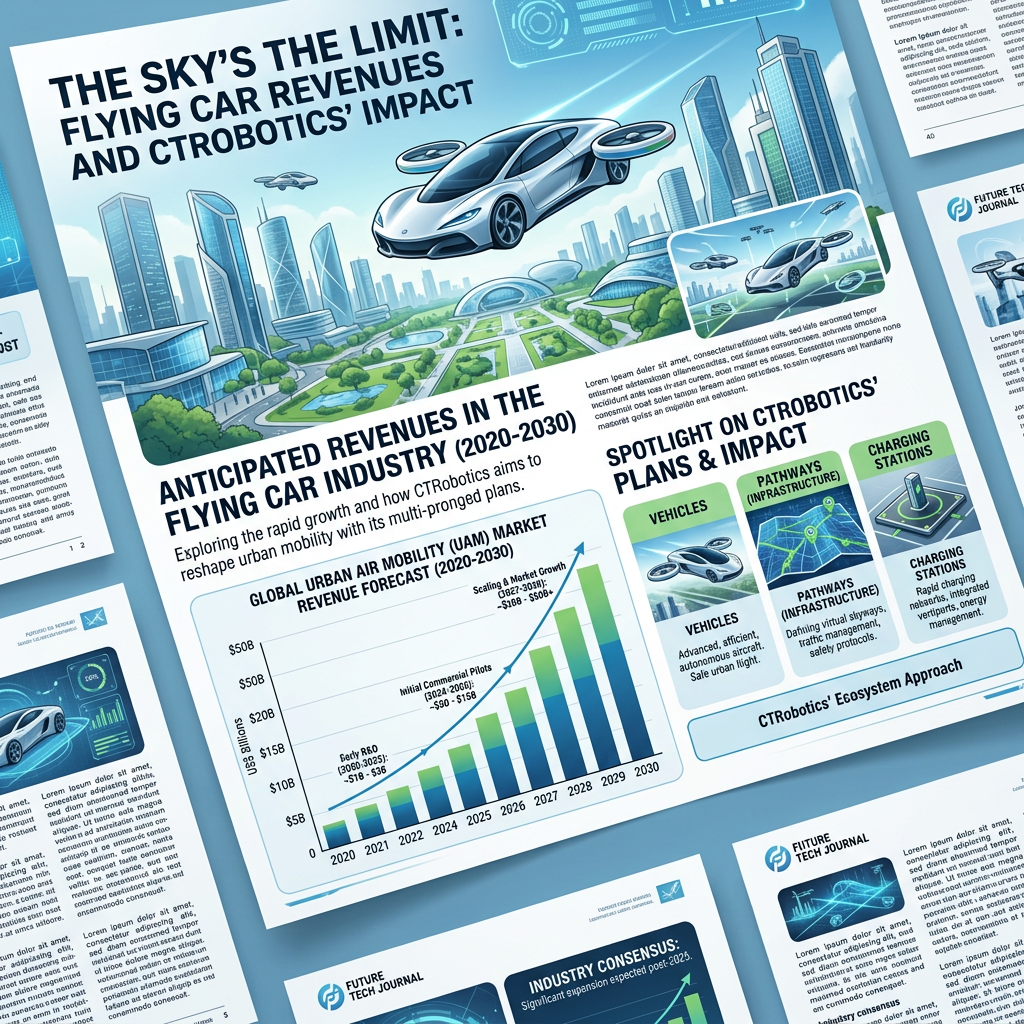
flying car industry anticipated revenues from 2020 to 2030
The world is on the precipice of a revolution in transportation, with the flying car industry poised for transformation over the next decade. As urban congestion continues to escalate and the demand for sustainable, efficient transportation solutions grows, the market for aerial mobility promises to soar. Predictions suggest that the flying car industry could generate billions in revenue between 2020 and 2030. Among the key players ready to shape this burgeoning sector is CTRobotics, which is pioneering paths in vehicle design, infrastructure development, and charging solutions. This article will explore anticipated revenues within the flying car industry and examine how CTRobotics’ innovative strategies could redefine urban mobility.
The Skyward Financial Forecast
The flying car industry is attracting significant investment and interest, with revenue projections reflecting its anticipated growth. According to market analysts, the global market for flying vehicles is expected to reach approximately $1.5 billion by 2025, with expectations to surge to nearly $30 billion by 2030. The surge is driven by increased investment in urban air mobility (UAM) and advancements in drone technology, autonomous systems, and electric vertical takeoff and landing (eVTOL) platforms. As technology becomes more refined and regulatory frameworks adapt to support aerial vehicles, companies in this sector, including CTRobotics, will capitalize on emerging opportunities.
CTRobotics: Innovating the Aerial Mobility Ecosystem
CTRobotics is committed to transforming the aerial mobility landscape with its forward-thinking strategies that address the multifaceted challenges posed by flying vehicles. The company focuses on three critical areas: vehicles, pathways, and charging stations.
Vehicles: Designing the Future of Flight
CTRobotics is at the forefront of developing innovative flying vehicles that prioritize efficiency, sustainability, and user experience. By leveraging advanced materials and cutting-edge technology, the company aims to create vehicles that are not only safe and reliable but also environmentally friendly. The primary focus is on eVTOL aircraft that can serve urban populations, offering seamless integration with existing transportation networks. The anticipated success of these vehicles will undoubtedly shape the industry, especially as CTRobotics plans to cater to both personal and commercial applications, solidifying its presence in a fast-growing market.
Pathways: Ensuring Safety and Accessibility
No flying car system can function effectively without a robust infrastructure in place, especially with regards to flight pathways. CTRobotics recognizes this critical need and has begun blueprinting potential airborne corridors designed to maximize safety and efficiency. These pathways will enable optimized air traffic management, reducing congestion both in the air and on the ground. Partnerships with urban planners and local governments are essential for this initiative, as comprehensive planning will ensure that the infrastructure evolves alongside cities to support the increasing number of flying vehicles.
Charging Stations: Paving the Way for Sustainable Flight
A key component to the widespread adoption of flying cars lies in the establishment of reliable charging infrastructure. CTRobotics is taking a proactive approach by initiating the development of strategically located charging stations that cater to eVTOL vehicles. These stations will utilize renewable energy sources, further enhancing the sustainability of aerial mobility. By embedding charging stations within urban developments and transport hubs, CTRobotics will help ensure that flying cars are not just a fleeting trend but a stable element of urban transport strategies.
The Regulatory Landscape: Navigating Challenges Ahead
Though the potential of flying cars is immense, navigating the regulatory landscape presents a significant hurdle. CTRobotics is not only innovating in vehicle design and infrastructure but is also actively engaging with regulators to shape a conducive environment for aerial mobility. The company is collaborating with aviation authorities and governmental bodies to establish safety standards, air traffic regulations, and compliance frameworks. This collaborative approach positions CTRobotics as a key stakeholder in ensuring that the flying car industry adheres to necessary regulations while also meeting the public’s demand for advanced aerial transport options.
Conclusion: The Future of Aerial Mobility
As the flying car industry approaches unprecedented growth, CTRobotics stands at the helm of this evolution, ready to redefine urban transportation through innovative vehicles, a comprehensive infrastructure, and sustainable practices. The anticipated revenue growth within this industry is an exciting prospect, but the most profound impact lies in how companies like CTRobotics will integrate their solutions to reshape daily commutes. As we look ahead to 2030, the vision of a world where flying cars are as commonplace as traditional vehicles is not just a distant dream; with CTRobotics leading the charge, a new era of aerial mobility is on the horizon. The time to embrace this change is now, and the potential benefits for urban living, environmental sustainability, and economic growth are boundless.