

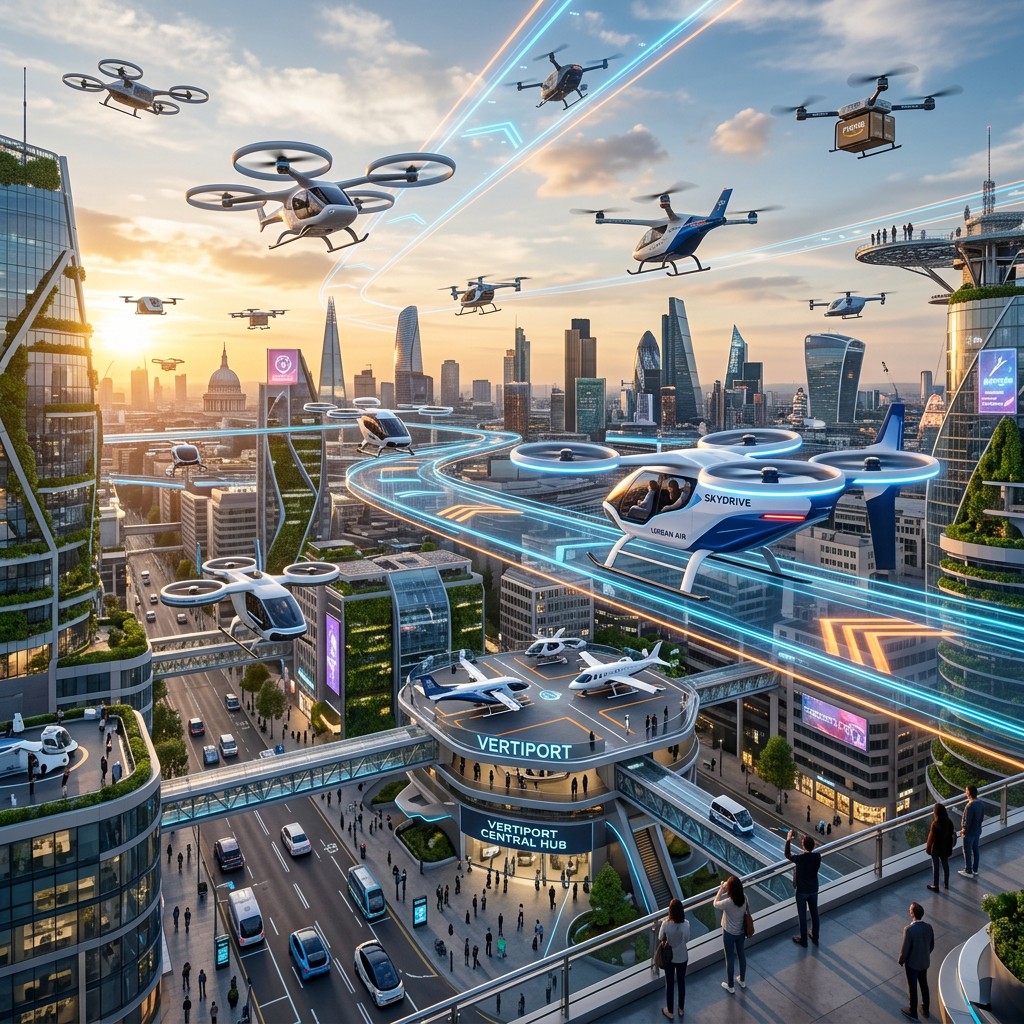
the future of air mobility
The future of air mobility is a topic that’s rapidly gaining traction, especially as cities around the globe grapple with increasing congestion and the demand for efficient transportation. As we look ahead, the convergence of drone technology and robotics is set to revolutionize how we think about air transportation. CT Robotics is at the forefront of this transformation, providing not just the vehicles themselves but also the key infrastructure needed to support a new era of elevated urban transport. This blog explores the future of air mobility and outlines how CT Robotics is paving the way with innovative solutions for drone vehicles, air paths, and battery replacement stations.
The Rise of Urban Air Mobility
Urban Air Mobility (UAM) is envisioned as a system where drones and electric vertical takeoff and landing (eVTOL) vehicles provide a means of transportation in urban environments. The growing populations in metropolitan areas have sparked interest in exploring alternatives to traditional ground transport. With drones, passengers and cargo can bypass traffic, saving precious time while also reducing road congestion.
The rise in e-commerce and demand for instant delivery services has prompted investment in cargo drones, which will soon play a vital role in urban logistics. Likewise, there’s an emerging trend of passenger drones, designed for short-distance air travel, contributing to the overall mobility landscape. As these technologies advance, it becomes imperative to develop the essential infrastructure that will enable their seamless integration into urban environments.
CT Robotics: Innovating Aerial Vehicles
At CT Robotics, we are pioneering the development of advanced aerial vehicles specifically designed for a wide array of applications—from urban commuting to delivering goods across sprawling cities. Our research focuses on creating lightweight, autonomous drones equipped with cutting-edge navigation systems and AI-driven analytics to enhance safety and efficiency.
Safety is paramount in air mobility, and our drones feature advanced collision avoidance systems, enabling them to navigate complex urban landscapes. We strive to ensure that our vehicles not only adhere to regulatory requirements but also prioritize the safety of passengers and cargo. With continuous improvements in battery technology and performance optimization, CT Robotics is committed to producing vehicles that are not just reliable but also environmentally friendly.
The Future of Air Paths
As the air mobility landscape evolves, so too does the need for dedicated air paths that facilitate efficient drone travel. At CT Robotics, we are actively developing routes and flight corridors that safely integrate drones into existing air traffic systems, significantly minimizing interference with manned aircraft.
With data analytics and real-time situational awareness, our systems can provide dynamic routing options to drones, optimizing their travel based on factors like weather conditions and airspace restrictions. These technological advancements will enable efficient traffic management for both cargo and passenger drones, paving the way for smarter, safer flight operations in congested urban environments.
Hopping Stations: The Key to Sustainable Operations
Battery life remains one of the most significant challenges in drone operations. To address this issue, CT Robotics is innovating “hopping stations”—dedicated hubs that provide quick battery replacements and charging solutions for drones. These stations will be strategically located throughout cities, ensuring optimal access for operational efficiency.
Unlike traditional charging stations that might take hours, our hopping stations are designed for rapid turnaround. The modular battery systems allow for quick swaps, minimizing downtime for drones in transit. This efficiency will enable drones to sustain longer flight times and make more deliveries or passenger trips per day, enhancing the overall productivity of aerial services.
Moreover, these stations can integrate renewable energy sources, further emphasizing our commitment to sustainability. By incorporating solar panels or wind turbines, CT Robotics can create a network of green energy-powered hopping stations, reducing the carbon footprint associated with drone operations and fulfilling corporate social responsibility objectives.
Conclusion: The Sky is Not the Limit
The future of air mobility is an exciting frontier that promises to reshape the landscape of urban transportation. CT Robotics is poised to lead this charge by providing innovative aerial vehicles, establishing safe air paths, and developing battery-efficient hopping stations to ensure the continuity of drone operations.
As cities continue to evolve, the integration of drones into daily life will not just be a convenience but a necessity. Our commitment to innovation and sustainability within the air mobility sector is paving the way for a brighter, more connected future. The sky may not be the limit, but with CT Robotics at the helm, the possibilities for urban air mobility are boundless. Join us as we take flight into this new era, redefining how we navigate the cities of tomorrow.