

CT ROBOTICS Blog
News, insights, and updates from the forefront of robotics.

As urban populations continue to swell, traffic congestion remains one of the most pressing challenges of modern commuting. The dream of flying cars, a vision once relegated to the realms of sci-fi, has begun to materialize, propelled by advancements in drone technology, robotics, and aerial mobility. Today, innovations in these fields are not just transforming transportation; they are redefining it. In this article, we will explore how flying cars are not merely a fantasy but a tangible prospect for commuters on the horizon. ## The Evolution of Aerial Mobility Aerial mobility has been evolving rapidly, fueled by advancements in electric vertical takeoff and landing (eVTOL) aircraft and drone technology. For decades, inventors and engineers have conceptualized personal flying vehicles, but it is only within the last few years that breakthroughs in battery technology, materials science, and computing power have made their practical use conceivable. Today, prototypes from various companies worldwide are undergoing rigorous testing, with some even nearing regulatory approval. The convergence of these technologies has facilitated the development of vehicles capable of carrying passengers on short trips, greatly reducing travel times in congested urban areas. The increasing availability of lightweight materials and improvements in battery life are allowing flying vehicles to become more efficient, further fueling the race towards commercial production. ## Regulatory Frameworks Taking Shape While the technological developments are promising, the road to widespread adoption of flying cars also involves the establishment of regulatory frameworks. Aviation authorities globally are working to create rules and regulations governing the use of these new vehicles. Governments must ensure that flying cars are safe, efficient, and environmentally friendly, leading to collaborative efforts between policymakers, manufacturers, and urban planners. The Federal Aviation Administration (FAA) in the United States has already made strides towards integrating eVTOLs into the airspace. Changes in air traffic management systems and dedicated air corridors for urban flight are essential steps in this process. Moreover, public acceptance is critical; developing guidelines that ensure the safety and reliability of flying cars will be vital in winning over hesitant commuters. ## Innovations in Technology Driving the Future One of the key aspects of making flying cars a viable option for everyday commuters is the integration of advanced technologies such as artificial intelligence (AI), autonomous systems, and advanced navigation tools. AI can optimize flight paths, reduce energy consumption, and enhance safety features, while autonomous flying capabilities can alleviate the need for a pilot, simplifying usage for the average consumer. Moreover, advancements in drone technology are paving the way for safer, more efficient aerial vehicles. Multi-rotor designs allow for greater stability and control, while noise reduction technologies are emerging to address one of the primary public concerns about flying vehicles—noise pollution. Companies like Vertical Aerospace and Joby Aviation are leading the charge by developing aircraft that prioritize ease of use and energy efficiency, showcasing the future of air transportation that could redefine commuting as we know it. ## The Potential Impact on Urban Commuting The introduction of flying cars into urban commuting could have transformative implications. By taking to the skies, these vehicles can circumvent the gridlock that plagues many major cities. A recent study estimated that flying cars could reduce travel times by up to 60%, substantially enhancing productivity and quality of life for commuters. Additionally, flying cars could also significantly reduce the environmental impact of commuting. With the push for electric vehicles in the automotive industry, the movement towards electric flying cars aligns perfectly with global sustainability goals. As traditional fuel sources become scrutinized, electric vertical takeoff and landing aircraft offer a cleaner alternative, promising reduced carbon footprints for urban commuting. Improving connectivity between city hubs and underserved areas is another critical benefit of flying cars. This enhanced access can stimulate local economies, promote tourism, and provide residents with greater mobility options. ## Closing the Gap: Challenges Ahead Despite all the excitement surrounding the possibility of flying cars, several challenges must be addressed. Technical hurdles, such as battery range and power management, must be resolved to ensure reliability and practicality. Furthermore, public perceptions need to be managed, societal concerns regarding safety, privacy, and airspace congestion cannot be ignored. Additionally, significant infrastructure investments are necessary to support the operational demands of flying vehicles. Vertiports for takeoff and landing, maintenance facilities, and charging stations will all be essential components of a future urban landscape that incorporates flying cars. ## A New Era of Commuting As we stand on the brink of a new era in mobility, the prospect of flying cars is no longer just a figment of our imagination. With advancements in technology, regulatory frameworks being established, and innovative solutions being developed, the vision of a flying commuter vehicle edging closer to reality becomes clearer every day. In conclusion, the fusion of drone technology, robotics, and aerial mobility heralds a transformative period for commuting. As we navigate the challenges and opportunities ahead, flying cars symbolize not just a revolution in transportation but a bold step towards reshaping our cities and enhancing our lives. Embracing this future could bring us closer to a world where the sky truly is the limit for daily commutes.
By CT Robotics dronetech on 4/13/2026
Read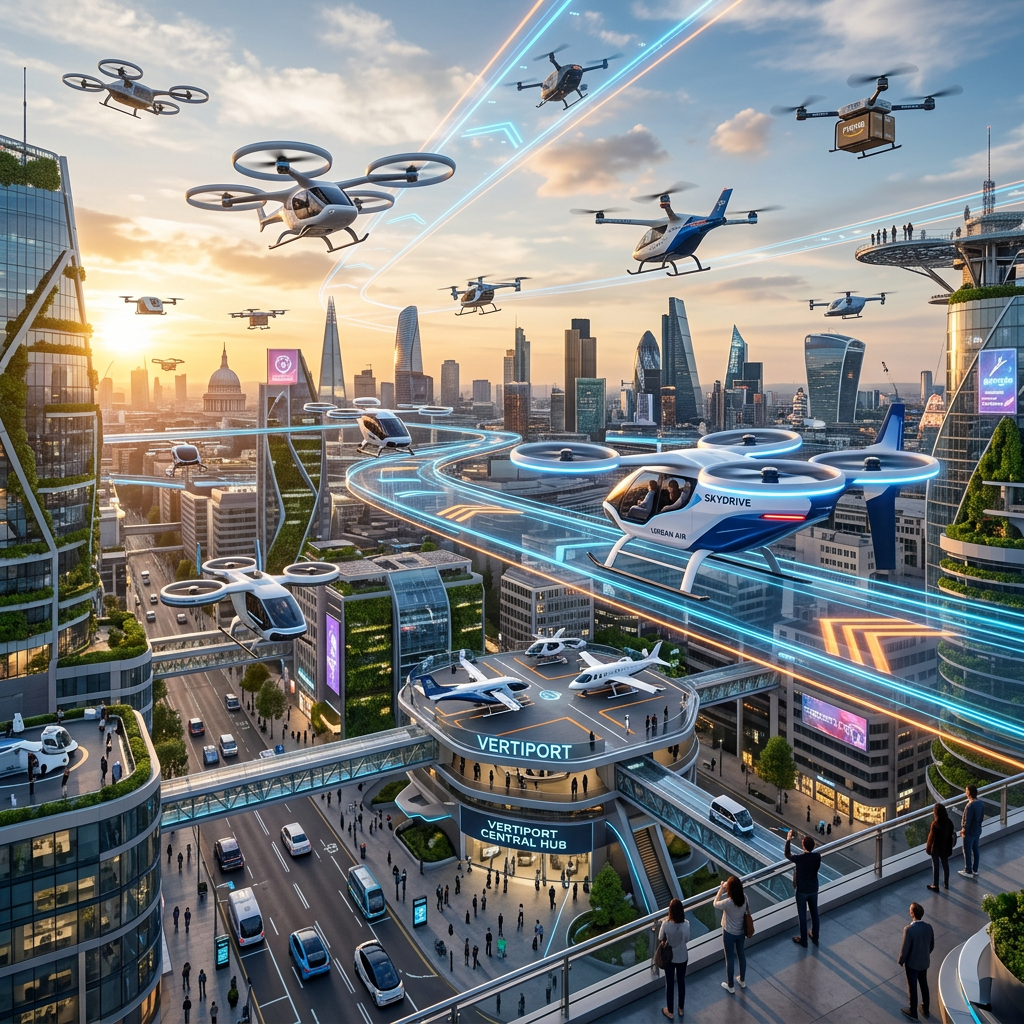
The future of air mobility is a topic that’s rapidly gaining traction, especially as cities around the globe grapple with increasing congestion and the demand for efficient transportation. As we look ahead, the convergence of drone technology and robotics is set to revolutionize how we think about air transportation. CT Robotics is at the forefront of this transformation, providing not just the vehicles themselves but also the key infrastructure needed to support a new era of elevated urban transport. This blog explores the future of air mobility and outlines how CT Robotics is paving the way with innovative solutions for drone vehicles, air paths, and battery replacement stations. ## The Rise of Urban Air Mobility Urban Air Mobility (UAM) is envisioned as a system where drones and electric vertical takeoff and landing (eVTOL) vehicles provide a means of transportation in urban environments. The growing populations in metropolitan areas have sparked interest in exploring alternatives to traditional ground transport. With drones, passengers and cargo can bypass traffic, saving precious time while also reducing road congestion. The rise in e-commerce and demand for instant delivery services has prompted investment in cargo drones, which will soon play a vital role in urban logistics. Likewise, there’s an emerging trend of passenger drones, designed for short-distance air travel, contributing to the overall mobility landscape. As these technologies advance, it becomes imperative to develop the essential infrastructure that will enable their seamless integration into urban environments. ## CT Robotics: Innovating Aerial Vehicles At CT Robotics, we are pioneering the development of advanced aerial vehicles specifically designed for a wide array of applications—from urban commuting to delivering goods across sprawling cities. Our research focuses on creating lightweight, autonomous drones equipped with cutting-edge navigation systems and AI-driven analytics to enhance safety and efficiency. Safety is paramount in air mobility, and our drones feature advanced collision avoidance systems, enabling them to navigate complex urban landscapes. We strive to ensure that our vehicles not only adhere to regulatory requirements but also prioritize the safety of passengers and cargo. With continuous improvements in battery technology and performance optimization, CT Robotics is committed to producing vehicles that are not just reliable but also environmentally friendly. ## The Future of Air Paths As the air mobility landscape evolves, so too does the need for dedicated air paths that facilitate efficient drone travel. At CT Robotics, we are actively developing routes and flight corridors that safely integrate drones into existing air traffic systems, significantly minimizing interference with manned aircraft. With data analytics and real-time situational awareness, our systems can provide dynamic routing options to drones, optimizing their travel based on factors like weather conditions and airspace restrictions. These technological advancements will enable efficient traffic management for both cargo and passenger drones, paving the way for smarter, safer flight operations in congested urban environments. ## Hopping Stations: The Key to Sustainable Operations Battery life remains one of the most significant challenges in drone operations. To address this issue, CT Robotics is innovating “hopping stations”—dedicated hubs that provide quick battery replacements and charging solutions for drones. These stations will be strategically located throughout cities, ensuring optimal access for operational efficiency. Unlike traditional charging stations that might take hours, our hopping stations are designed for rapid turnaround. The modular battery systems allow for quick swaps, minimizing downtime for drones in transit. This efficiency will enable drones to sustain longer flight times and make more deliveries or passenger trips per day, enhancing the overall productivity of aerial services. Moreover, these stations can integrate renewable energy sources, further emphasizing our commitment to sustainability. By incorporating solar panels or wind turbines, CT Robotics can create a network of green energy-powered hopping stations, reducing the carbon footprint associated with drone operations and fulfilling corporate social responsibility objectives. ## Conclusion: The Sky is Not the Limit The future of air mobility is an exciting frontier that promises to reshape the landscape of urban transportation. CT Robotics is poised to lead this charge by providing innovative aerial vehicles, establishing safe air paths, and developing battery-efficient hopping stations to ensure the continuity of drone operations. As cities continue to evolve, the integration of drones into daily life will not just be a convenience but a necessity. Our commitment to innovation and sustainability within the air mobility sector is paving the way for a brighter, more connected future. The sky may not be the limit, but with CT Robotics at the helm, the possibilities for urban air mobility are boundless. Join us as we take flight into this new era, redefining how we navigate the cities of tomorrow.
By CT Robotics dronetech on 3/16/2026
Read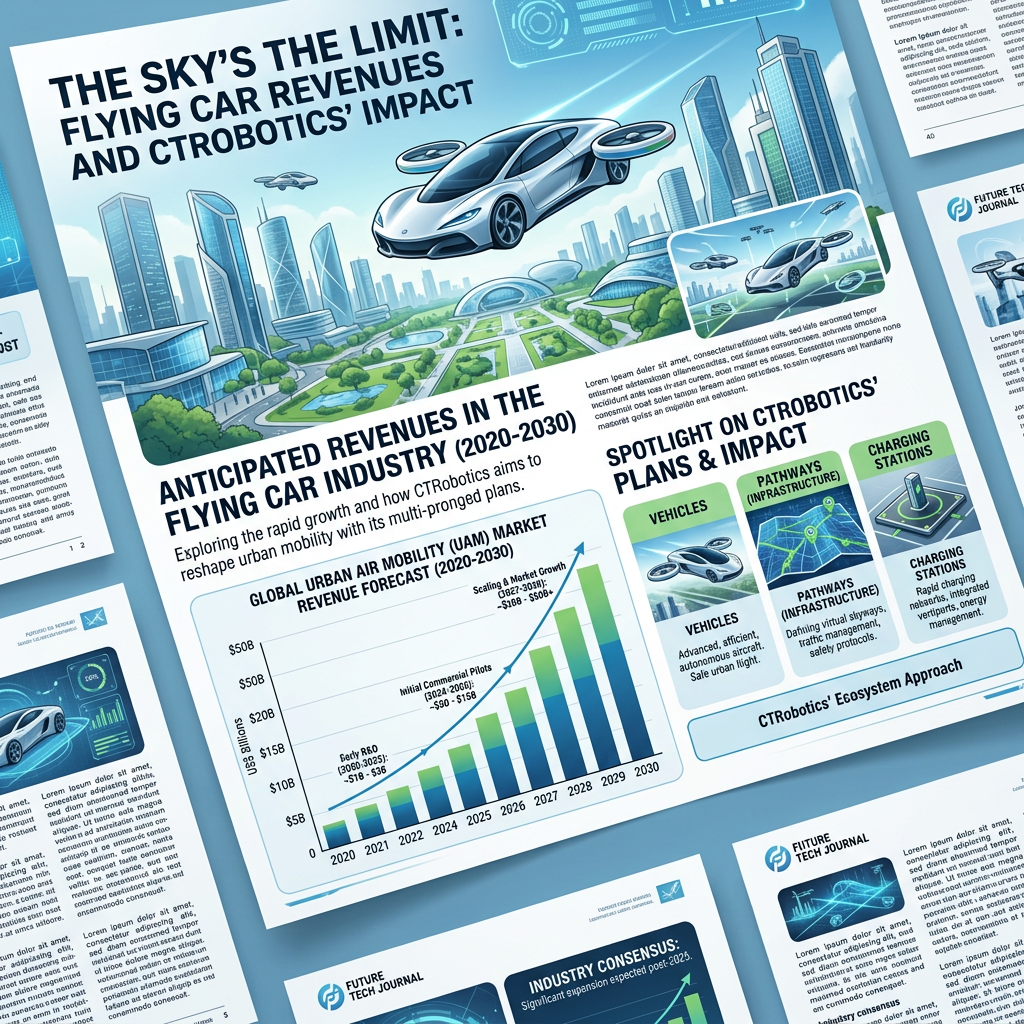
The world is on the precipice of a revolution in transportation, with the flying car industry poised for transformation over the next decade. As urban congestion continues to escalate and the demand for sustainable, efficient transportation solutions grows, the market for aerial mobility promises to soar. Predictions suggest that the flying car industry could generate billions in revenue between 2020 and 2030. Among the key players ready to shape this burgeoning sector is CTRobotics, which is pioneering paths in vehicle design, infrastructure development, and charging solutions. This article will explore anticipated revenues within the flying car industry and examine how CTRobotics’ innovative strategies could redefine urban mobility. ## The Skyward Financial Forecast The flying car industry is attracting significant investment and interest, with revenue projections reflecting its anticipated growth. According to market analysts, the global market for flying vehicles is expected to reach approximately $1.5 billion by 2025, with expectations to surge to nearly $30 billion by 2030. The surge is driven by increased investment in urban air mobility (UAM) and advancements in drone technology, autonomous systems, and electric vertical takeoff and landing (eVTOL) platforms. As technology becomes more refined and regulatory frameworks adapt to support aerial vehicles, companies in this sector, including CTRobotics, will capitalize on emerging opportunities. ## CTRobotics: Innovating the Aerial Mobility Ecosystem CTRobotics is committed to transforming the aerial mobility landscape with its forward-thinking strategies that address the multifaceted challenges posed by flying vehicles. The company focuses on three critical areas: vehicles, pathways, and charging stations. ### Vehicles: Designing the Future of Flight CTRobotics is at the forefront of developing innovative flying vehicles that prioritize efficiency, sustainability, and user experience. By leveraging advanced materials and cutting-edge technology, the company aims to create vehicles that are not only safe and reliable but also environmentally friendly. The primary focus is on eVTOL aircraft that can serve urban populations, offering seamless integration with existing transportation networks. The anticipated success of these vehicles will undoubtedly shape the industry, especially as CTRobotics plans to cater to both personal and commercial applications, solidifying its presence in a fast-growing market. ### Pathways: Ensuring Safety and Accessibility No flying car system can function effectively without a robust infrastructure in place, especially with regards to flight pathways. CTRobotics recognizes this critical need and has begun blueprinting potential airborne corridors designed to maximize safety and efficiency. These pathways will enable optimized air traffic management, reducing congestion both in the air and on the ground. Partnerships with urban planners and local governments are essential for this initiative, as comprehensive planning will ensure that the infrastructure evolves alongside cities to support the increasing number of flying vehicles. ### Charging Stations: Paving the Way for Sustainable Flight A key component to the widespread adoption of flying cars lies in the establishment of reliable charging infrastructure. CTRobotics is taking a proactive approach by initiating the development of strategically located charging stations that cater to eVTOL vehicles. These stations will utilize renewable energy sources, further enhancing the sustainability of aerial mobility. By embedding charging stations within urban developments and transport hubs, CTRobotics will help ensure that flying cars are not just a fleeting trend but a stable element of urban transport strategies. ### The Regulatory Landscape: Navigating Challenges Ahead Though the potential of flying cars is immense, navigating the regulatory landscape presents a significant hurdle. CTRobotics is not only innovating in vehicle design and infrastructure but is also actively engaging with regulators to shape a conducive environment for aerial mobility. The company is collaborating with aviation authorities and governmental bodies to establish safety standards, air traffic regulations, and compliance frameworks. This collaborative approach positions CTRobotics as a key stakeholder in ensuring that the flying car industry adheres to necessary regulations while also meeting the public’s demand for advanced aerial transport options. ## Conclusion: The Future of Aerial Mobility As the flying car industry approaches unprecedented growth, CTRobotics stands at the helm of this evolution, ready to redefine urban transportation through innovative vehicles, a comprehensive infrastructure, and sustainable practices. The anticipated revenue growth within this industry is an exciting prospect, but the most profound impact lies in how companies like CTRobotics will integrate their solutions to reshape daily commutes. As we look ahead to 2030, the vision of a world where flying cars are as commonplace as traditional vehicles is not just a distant dream; with CTRobotics leading the charge, a new era of aerial mobility is on the horizon. The time to embrace this change is now, and the potential benefits for urban living, environmental sustainability, and economic growth are boundless.
By CT Robotics dronetech on 3/12/2026
Read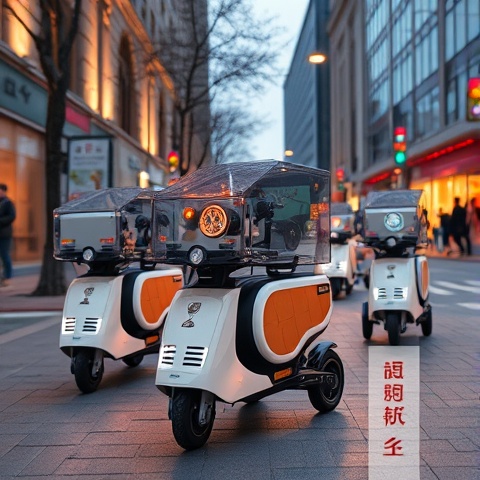
Introduction The rise of micromobility solutions, such as rental scooters, has transformed how people move through cities. While convenient, these systems face challenges like improper parking, low battery availability, and maintenance inefficiencies. Robotics is emerging as a powerful solution to these urban mobility issues. Key Applications of Robotics in Rental Scooters Self-Parking Scooters Scooters equipped with robotic drive-assist modules can reposition themselves to designated parking spots. This reduces clutter on sidewalks and helps cities enforce parking regulations. Autonomous Fleet Rebalancing Robotic systems enable scooters to drive themselves to high-demand zones. Eliminates the need for manual truck-based fleet redistribution, cutting operational costs and traffic congestion. Automated Charging Solutions Some scooters integrate robotic docking stations where they autonomously return for charging. Wireless charging pads and robotic battery-swapping arms further streamline the process. Safety and Maintenance Robotics allows real-time diagnostics of scooters’ mechanical and electronic components. AI-driven monitoring can detect issues like brake wear, flat tires, or motor malfunctions, and guide the scooter to a service hub autonomously. Benefits to Cities and Users Reduced Sidewalk Clutter: Self-parking scooters improve walkability and urban aesthetics. Lower Operational Costs: Automation reduces reliance on human workers for collection and redeployment. Environmental Gains: Less need for collection trucks lowers emissions. Improved Availability: Scooters autonomously balance across the city, ensuring users always find one nearby. Challenges Ahead Infrastructure Readiness – Cities need designated robotic parking and charging hubs. Regulatory Frameworks – Safety standards for self-driving scooters must be established. Cost of Deployment – Adding robotics raises scooter unit prices, impacting scalability. User Trust & Safety – Riders and pedestrians must feel safe sharing space with robotic mobility devices. Conclusion Robotics is set to redefine urban micromobility by making rental scooter systems smarter, safer, and more sustainable. While widespread adoption requires investment in infrastructure and regulatory adjustments, the future of city transportation is pointing toward autonomous, self-managing fleets that blend convenience with efficiency.
By CT Robotics dronetech on 9/18/2025
Read